Changelog

Paralect Agent, and tasks in a sandbox

Control Panel is now Paralect Agent, and tasks run in a sandbox that keeps them inside their project.

Control Panel has a new name: Paralect Agent. The app, the desktop icon (a black star on a yellow tile) and the landing page all carry it.

Tasks in a sandbox

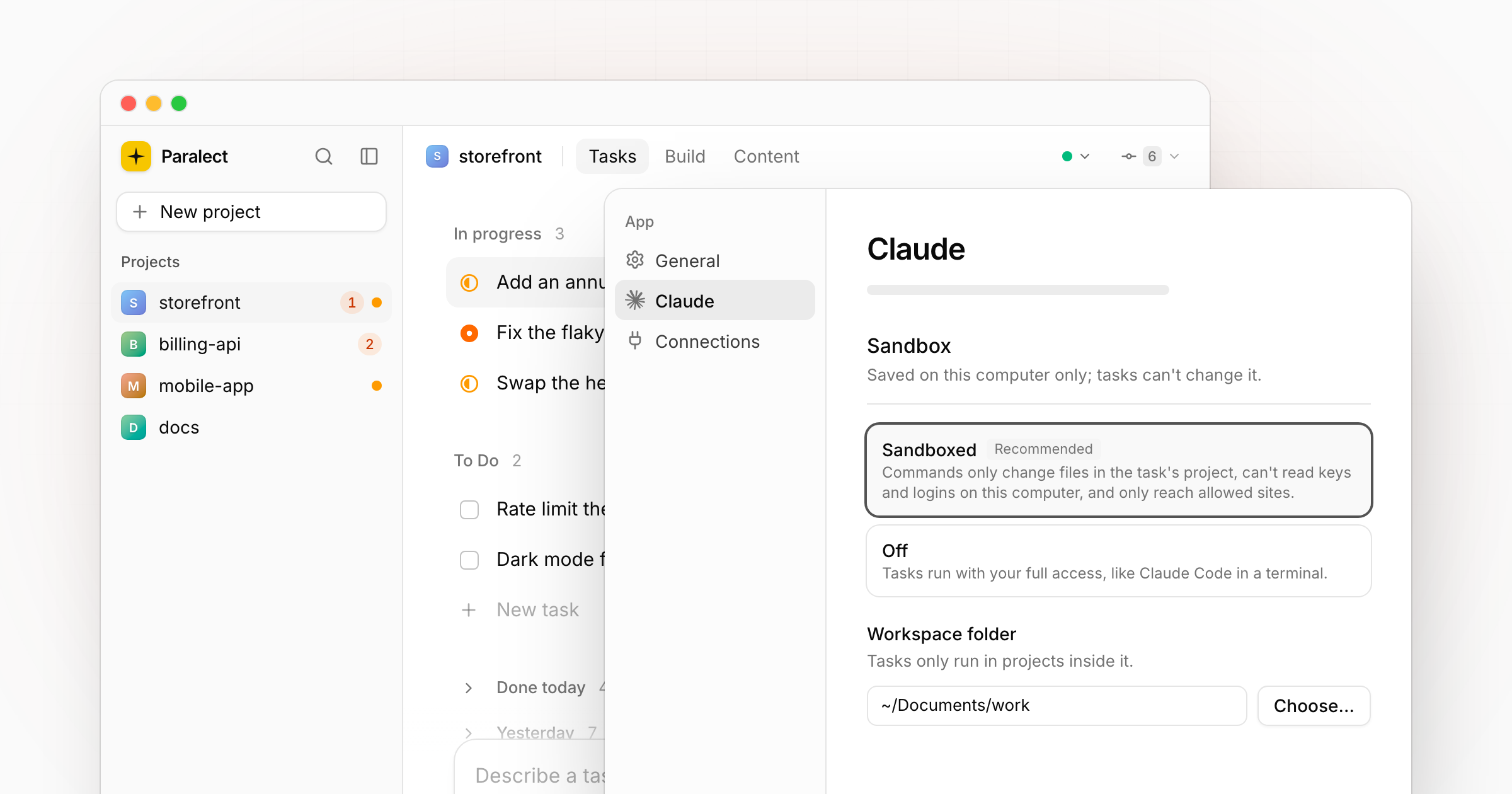
A task can now run in a sandbox. Choose it under Settings → Claude → Sandbox:

  • Sandboxed (recommended): commands only change files in the task's own project, can't read keys and logins on your computer, and only reach allowed sites. Pushing and deploying are left to you.
  • Off: tasks run with your full access, like Claude Code in a terminal. Only for projects where every task comes from you.

Set a workspace folder, the one that holds your projects, and tasks only run in projects inside it; your Documents, Desktop and other projects' .env files stay out of reach. Changes apply to running tasks with their next comment.

When a task genuinely needs more, Run outside the sandbox in its menu lets it out, approved on this computer only. Rendering videos and taking screenshots run outside the sandbox on their own.

Claude settings for every project

The Claude settings moved to Settings → Claude and apply to all projects on this computer.

Headers for the changelog

Every release in this changelog now opens with a picture of the part of the app it's about.

Fixed

  • A file preview no longer opens a file of the same name from another folder.
Screen sizes in Build and new skills

Preview your site at a phone's size, draw a logo, write copy by Paralect's rules, and updates follow their files when they move.

Screen sizes in Build

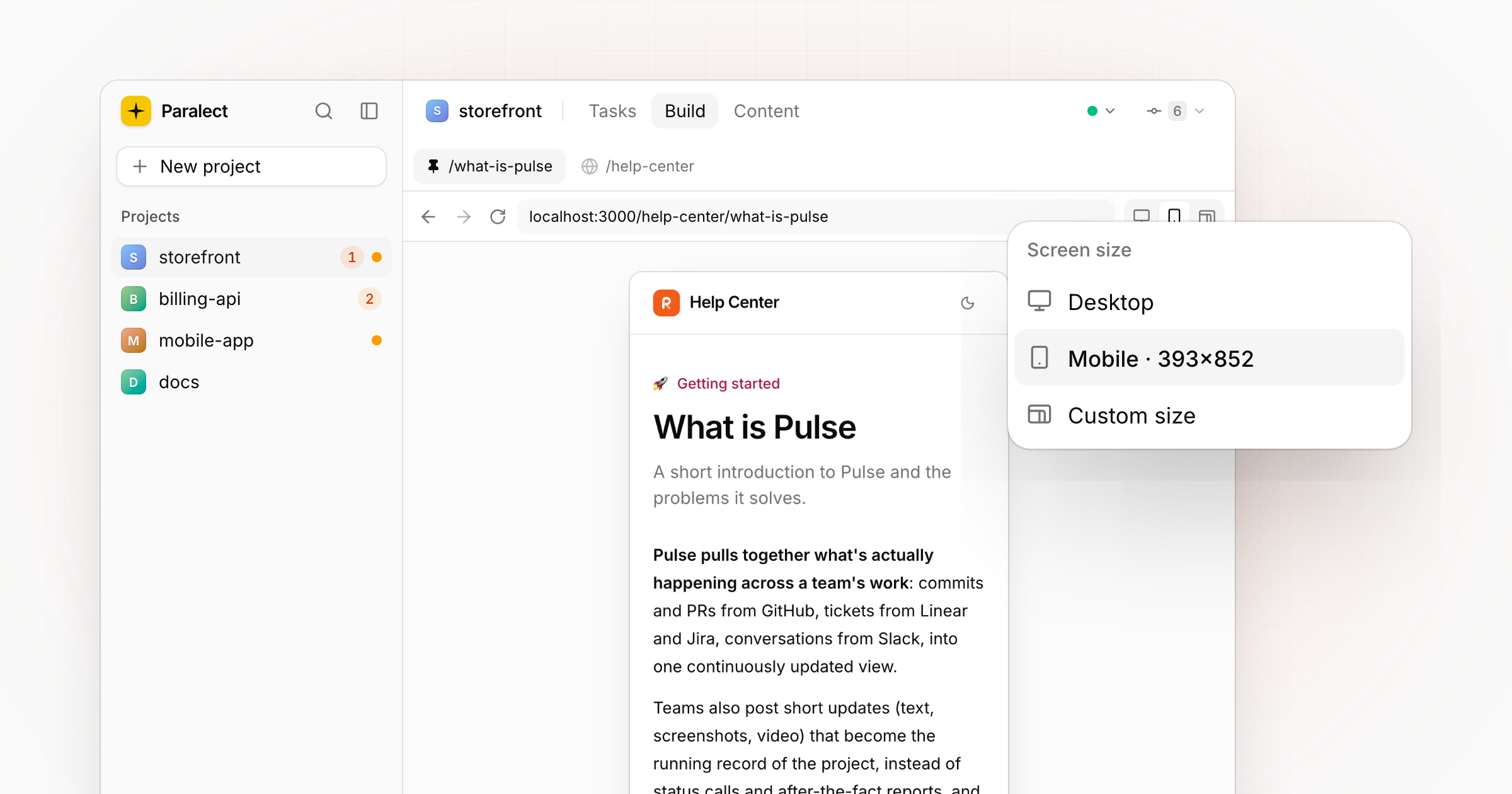
The address bar in Build has a screen-size switch: Desktop, Mobile at 393×852, or a Custom size you type in. The preview resizes in place, so you can check how a page reads on a phone without leaving the app. Popovers on the Build page now close when you click anywhere outside them, the preview included.

New skills on Run

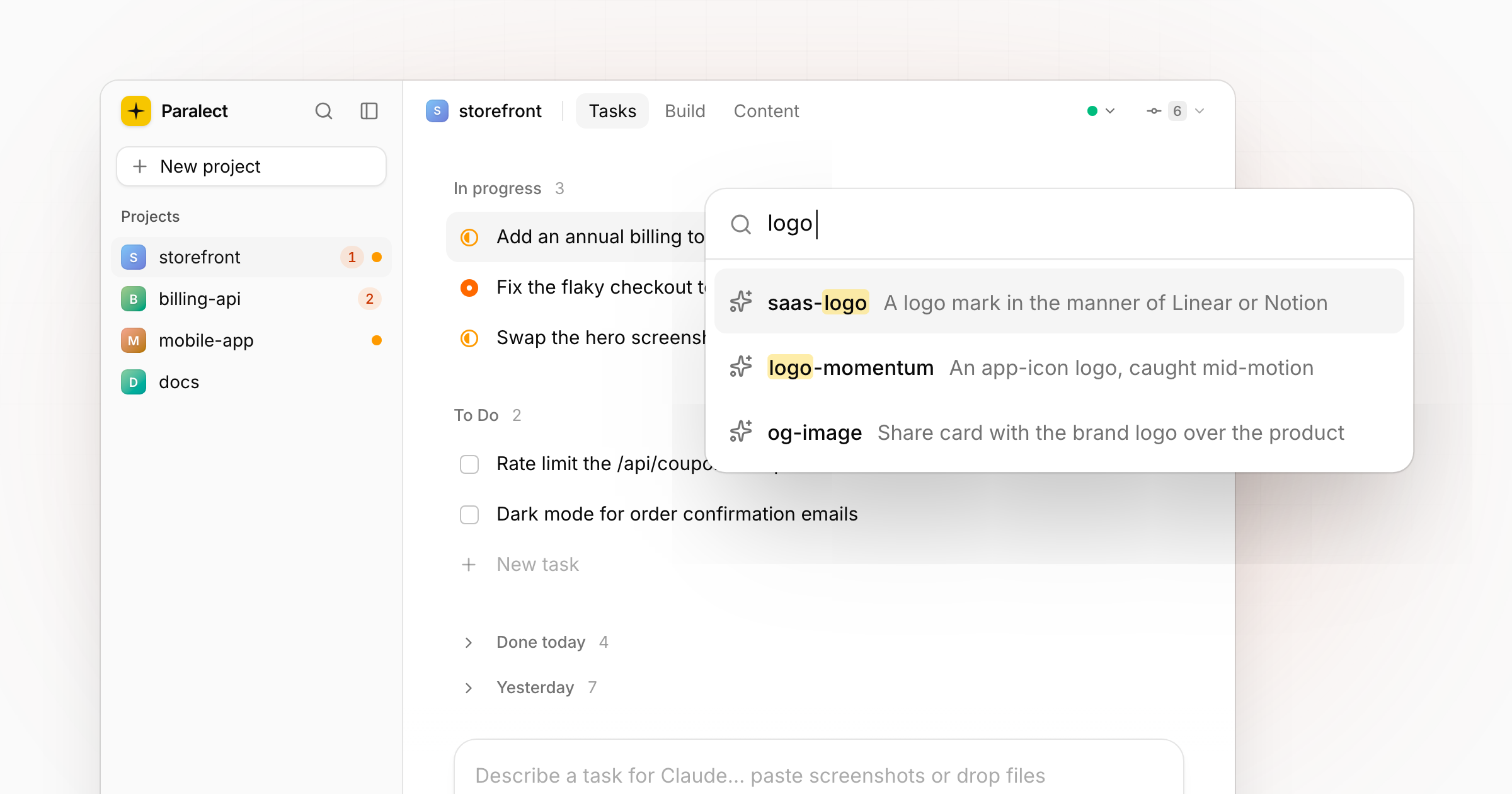
  • saas-logo draws a logo mark in the manner of Notion, Linear or Vercel, several concepts at once, and cuts the one you pick into transparent PNGs: the mark alone and the app-icon tile.
  • Paralect Copywriter rewrites landing pages, articles and posts by Paralect's product marketing rules. It's suggested on Run, with a before-and-after preview.

Updates follow their files

Renaming or moving an update's file on disk no longer makes a second copy of the post: the feed follows the file to its new place.

Updates as files, a Run window of skills and page views

Updates are kept as Markdown in the repository and show the pages they link to, the Run window leads with suggested skills, and every published page shows who read it.

The biggest day so far. Updates became files you can review and commit, the Run window became the place to find a skill, and published pages started counting their readers.

Updates you keep in the repository

Every post in Updates is saved as a Markdown file in the project, in a folder you pick under Settings → Updates. You still write in the same chat-like feed; the file is written for you, and a file edited on disk shows up in the feed. A post says who it's from and when: set the author, picture and date when posting, or change them later.

Updates moved out of the header's tabs and into the Commit menu, next to the commits they usually describe.

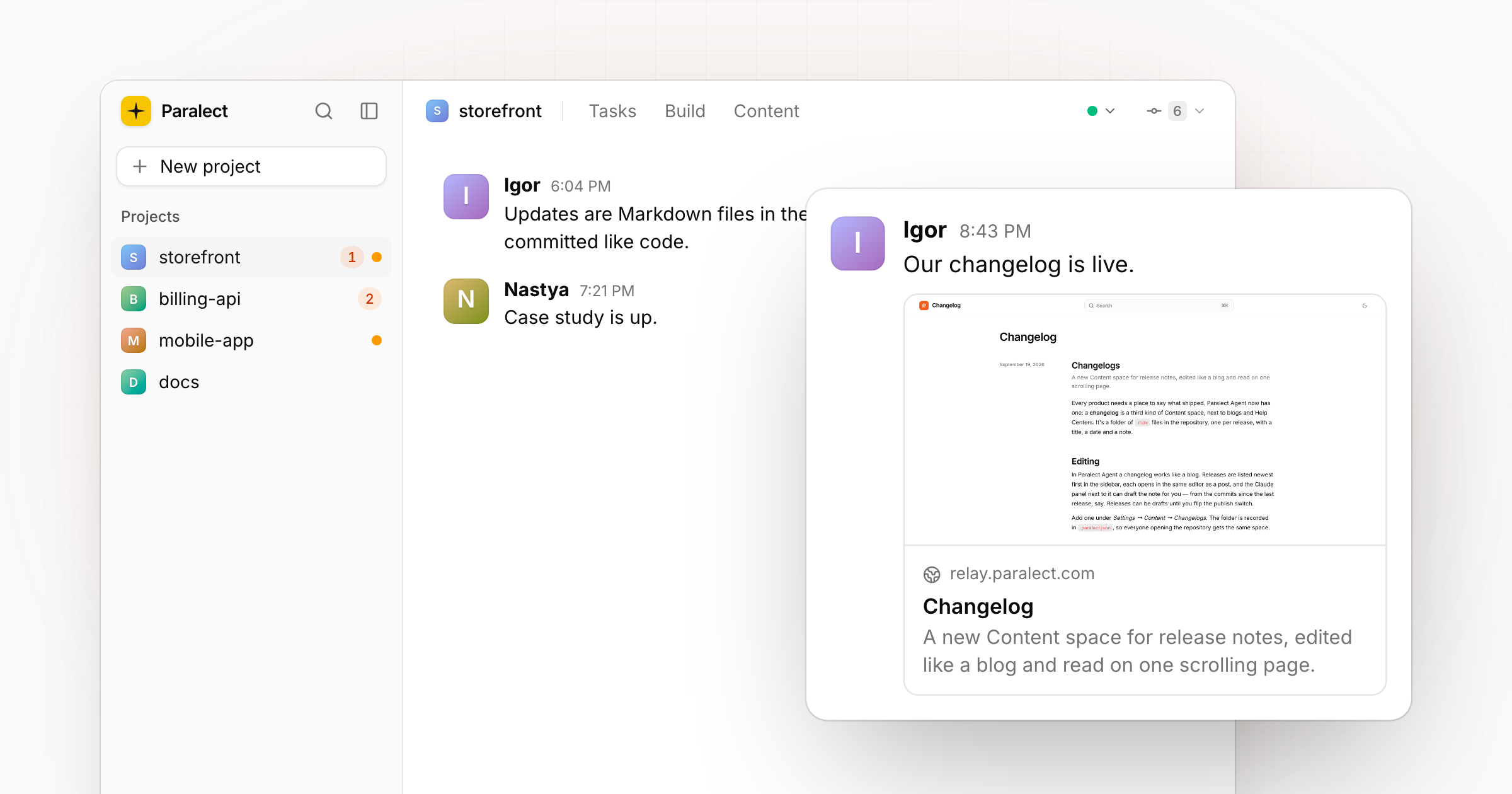
A link in a post becomes a card with the page's title, description and image, read from the page itself. Hover over a card to see the live page. Tweets, LinkedIn posts and Looms are embedded, and a link pasted into the box is previewed before you post.

The Run window

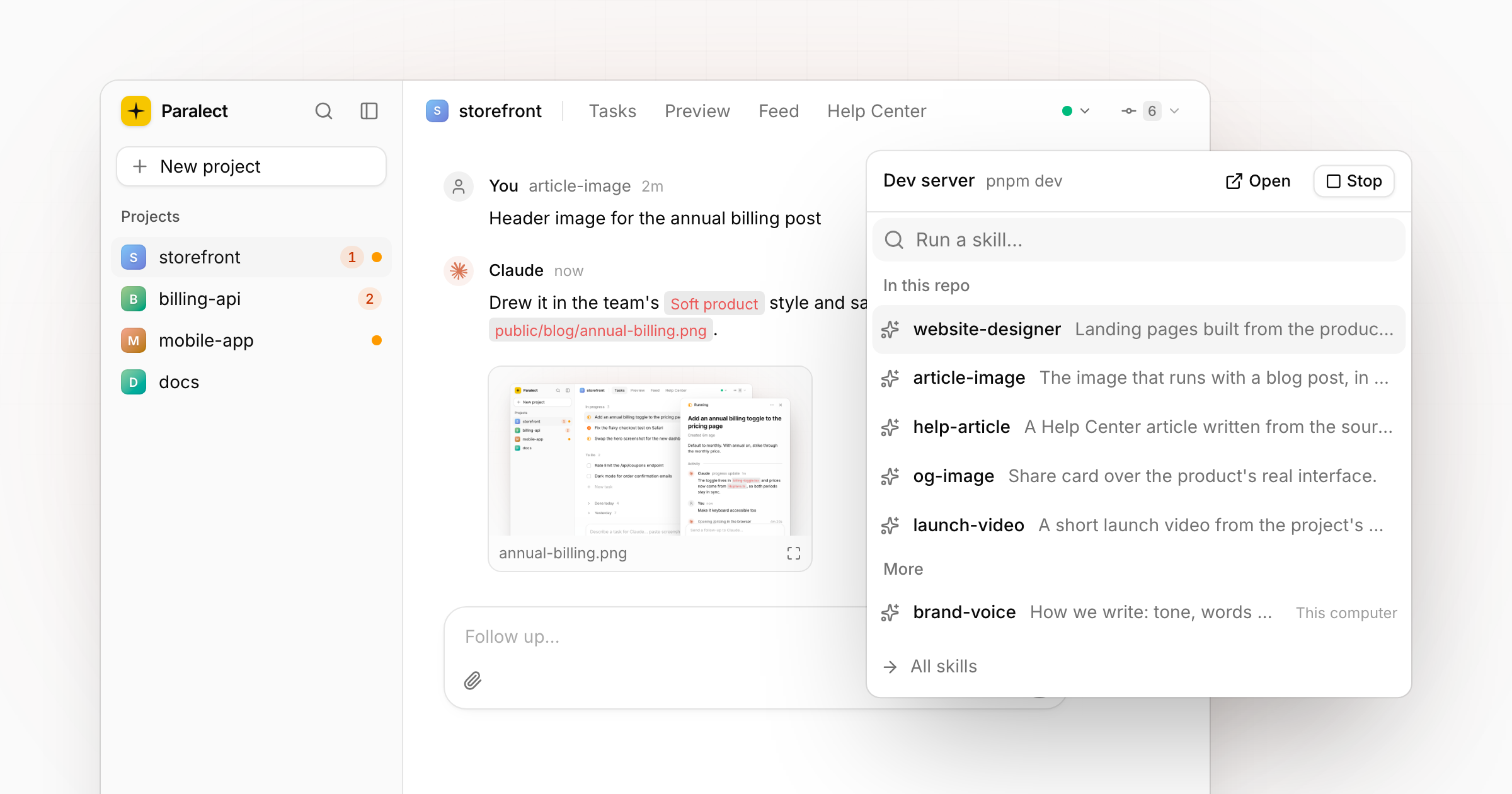
Run opens with suggested skills as cards with a preview of what they make, grouped under Reports, Website design, Images, Videos and Your skills, with every other skill listed below. New built-in skills:

  • content-spaces adds a blog, a help center, a directory, a changelog or an updates feed to a project and fills it from the code.
  • website-scroll records a scroll through any page as a short video.
  • video-demo records a product demo of your running app, with a drawn cursor.
  • SEO audit, og-image, website-designer and vibe-security come bundled.

A skill that needs no instructions, like an SEO audit, runs with an empty box.

Page views

Pick where your pages are measured under Settings → Content → Analytics: PostHog or Wave. Every published page then opens with its views and readers, and a click shows its top countries and referrers. In Build, the address bar shows the views of the page you're looking at and follows your clicks inside the preview.

Ask for status

A task that has been running for a while can be asked how it's going: Ask for status in the task's menu posts a progress update on demand.

Uploads on Cloudflare R2

Images and files you add to pages now go to a Cloudflare R2 bucket instead of Bunny CDN. Connect one under Settings → Connections. An upload whose public link doesn't load is refused with the fix spelled out, instead of leaving a broken image on the page.

Published assets

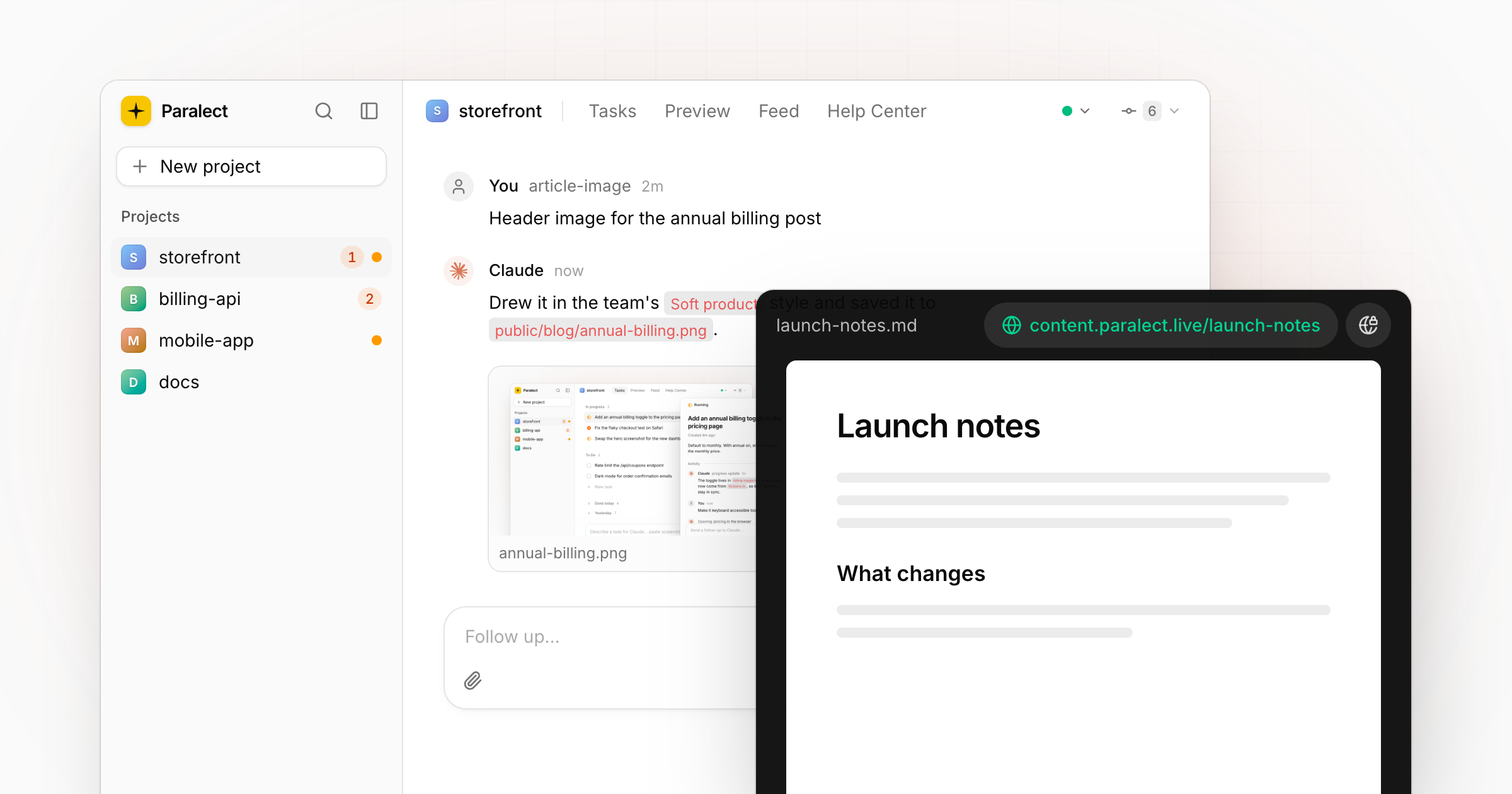
An image, a video, a page or a document Claude made in a task can be shared at a public link, straight from the chat.

Claude makes files you want to show people: a header image, a demo video, an HTML report, a PDF. Until now they stayed on your disk. Now any of them can be put at a public link from the chat where it appeared.

A file Claude produced in a task (an image, a video, an HTML page, a PDF or a Markdown document) opens in a viewer from its preview under the message, with Open file, Show in Finder and Publish. Publishing puts it at content.paralect.live/<slug> and copies the link. Documents are rendered like an article; anything else is served from the CDN.

The link stays green in the viewer's bar while the file is public. Publish again after Claude changes the file and the same link shows the new version; Unpublish takes it down.

Everything published, in one place

Settings → Assets lists everything a project has published, each with its link and an Unpublish button.

The Build tab, publishing to Relay and a team page

The dev server gets a tab of its own, help centers and blogs publish to Relay in one click, and the landing page shows how a team works together.

Build

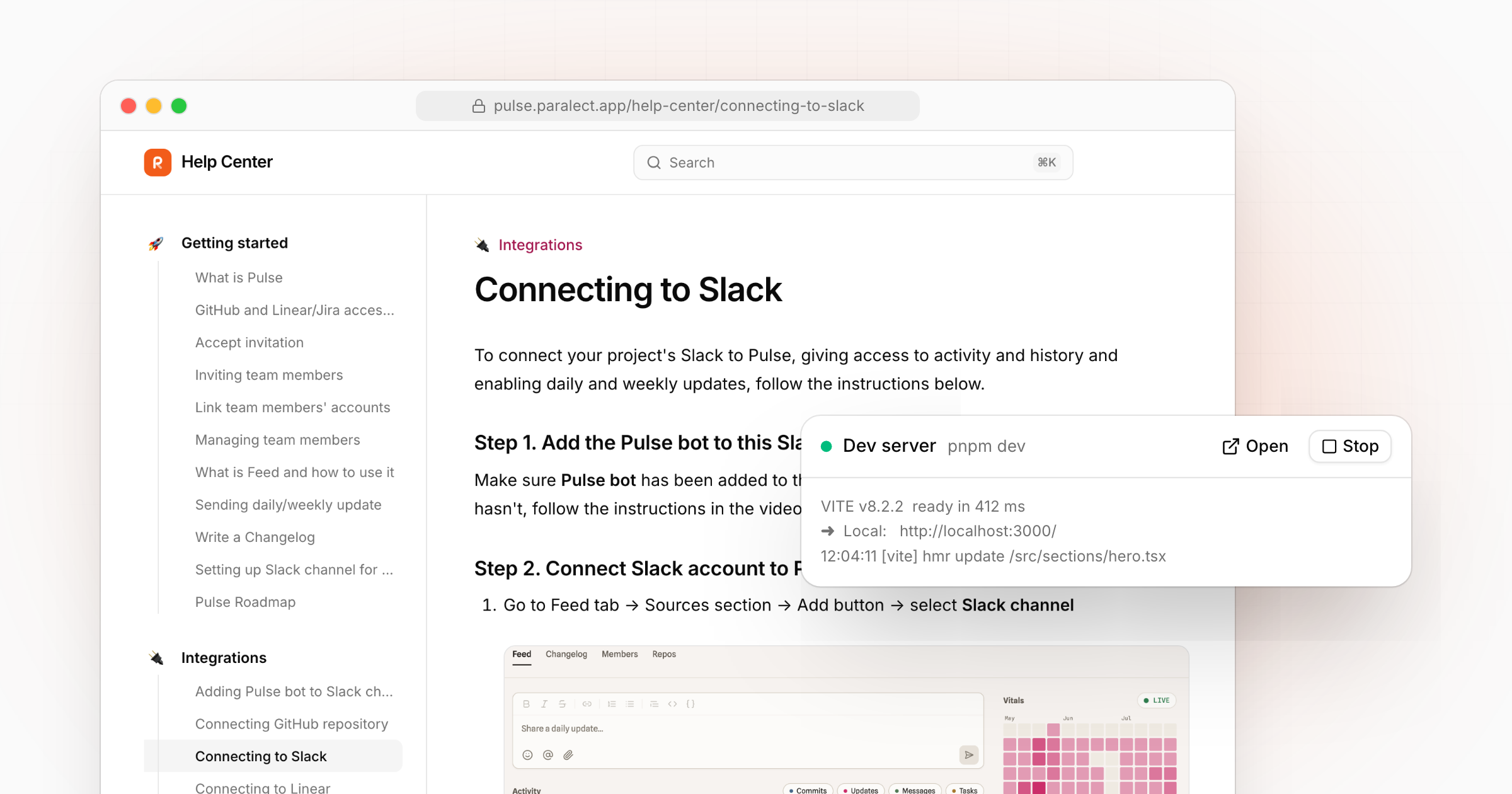
The dev server moved out of the Run menu and into a Build tab of its own. Start and stop the project's dev script there, watch its output, and pin the pages you're working on as preview tabs.

Publish to Relay

A help center or a blog kept as .mdx files in the repository is published to Relay with one click from the space's nav. From then on the two stay the same while the space is open: files changed on disk (by you, an agent or a pull) go to Relay, what's edited in Relay is written back to the files, and a page deleted on either side goes on the other. The Relay button in the nav shows the sync status.

The ids of the linked sites are written to .paralect.json, so whoever opens the repository next publishes to the same place. What readers get is in Relay's own changelog.

Help Center covers and auto-linking

Help pages can carry a cover image, and a docs folder found in the project is linked as a Help Center on its own.

Team

The landing page has a team section with a demo of how a few people and their agents share one board.

Changelogs

A new Content space for release notes, edited like a blog and read on one scrolling page.

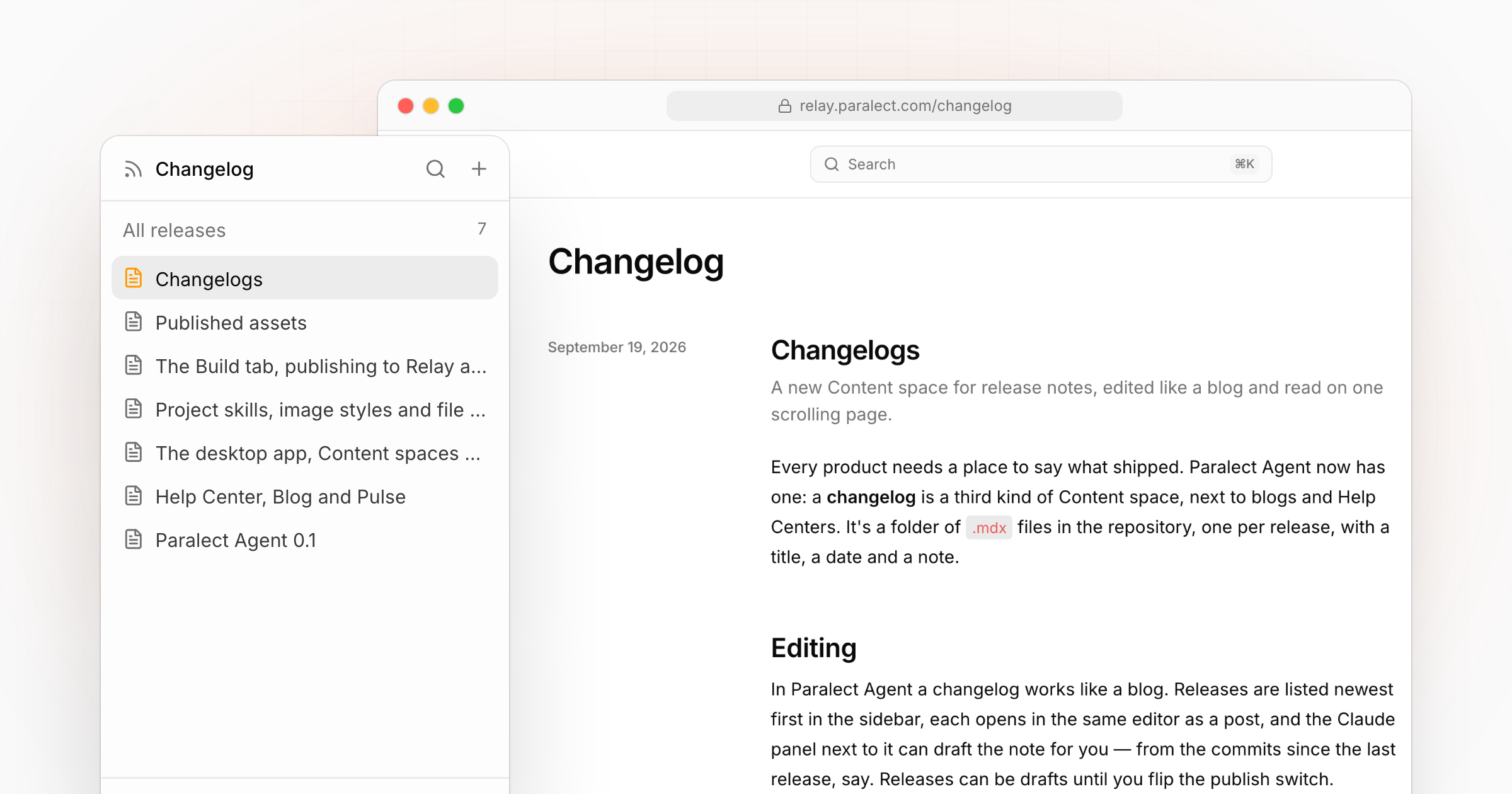
Every product needs a place to say what shipped. Paralect Agent now has one: a changelog is a third kind of Content space, next to blogs and Help Centers. It's a folder of .mdx files in the repository, one per release, with a title, a date and a note.

Editing

In Paralect Agent a changelog works like a blog. Releases are listed newest first in the sidebar, each opens in the same editor as a post, and the Claude panel next to it can draft the note for you — from the commits since the last release, say. Releases can be drafts until you flip the publish switch.

Add one under Settings → Content → Changelogs. The folder is recorded in .paralect.json, so everyone opening the repository gets the same space.

Reading

Published on Relay, a changelog is one long page: the date sits in a column on the left, the release on the right, and older releases load as you scroll. Each release still has its own address at <site>/changelog/<slug>, with a title, description and share card like any article, so a release can be linked from a tweet or a customer email.

This changelog is the first one. It lives at content/changelog in the Paralect Agent repository and is read at agent.paralect.com/changelog.

Project skills, image styles and file previews

Skills kept in the repository lead the list, article images can follow a house style, and files Claude makes show up under the message that mentions them.

Project skills

Skills in a project's .claude/skills and .agents/skills folders are scoped to that repository: they show first in the Skills tab, and they're edited from within the project like any other file. Skills from your home folder still appear when searched, or when nothing is pinned.

Image styles

The article-image skill now draws in one of the house styles kept in its styles/ folder, and article-image-style writes a new style from reference images and a description. Pick a style when you ask for an image, share the examples with the team, and contribute a style back with a pull request.

File previews

When Claude's reply mentions an image, a video, an HTML page or a PDF it produced, a preview appears below the message. Images referenced in a task's summary render inline, and documents open in their Content editor.

One-file commits

Publish one page while leaving the rest of the working tree alone: the commit dialog lets you pick the files, drafts a message from the diff with Claude, and pushes.

Review and commit, together

The review dialog and the commit dialog were merged into one, with file selection. Chats with Claude about a help page or an article — doc threads — now live next to the document, and MDX pages can hold a skill block that generates content with a skill in place.

The desktop app, Content spaces and device keys

Paralect Agent ships as a macOS app, blogs and help centers become Content spaces with SEO and publish controls, and each computer gets a key of its own.

A macOS app

The web app and the runner are bundled into one Electron app with auto-updates. Open it, sign in, and the runner starts in the background: no terminal needed. Every request to the local server needs a secret cookie only the app's window has, so other programs and OS users can't call it.

Content spaces

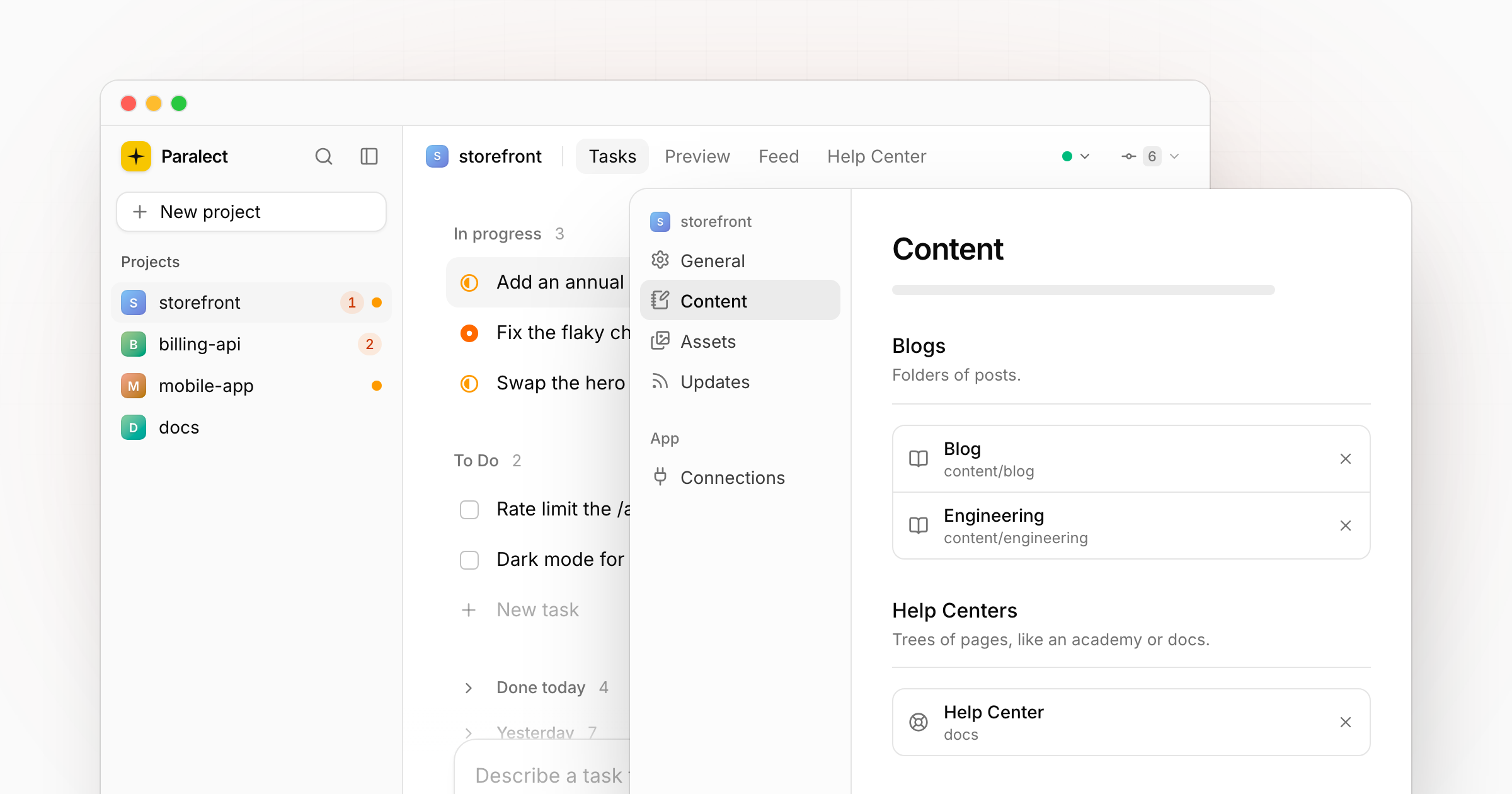
Blogs, Help Centers and Directories are now Content spaces. A project can have any number of each — a help center per role, an internal and an external blog — set under Settings → Content. Pages get SEO fields, a publish switch, and a Notion-style editor with callouts, galleries, pricing tables, cards and embeds. Images upload to Bunny CDN when it's connected.

Pages can also say how they read where they're listed — a shorter title for navigation, a different description for a directory card — under dirSettings, separate from the page's own title and description.

Screenshot notes

Tell Claude how to get into the running app — sign-in steps, test credentials, dialogs to dismiss — once, in project settings. It reads them before taking screenshots and can drive the page with a use_page tool before capturing.

Device keys

Nobody can see or change anyone else's data. Every Convex function checks who is calling. The web server and runner on your computer have no browser session, so after you sign in the page creates a random key for the computer: Convex stores only its SHA-256, and the key goes to ~/.paralect-agent/devices.json. Signing out revokes it.